THE LAND
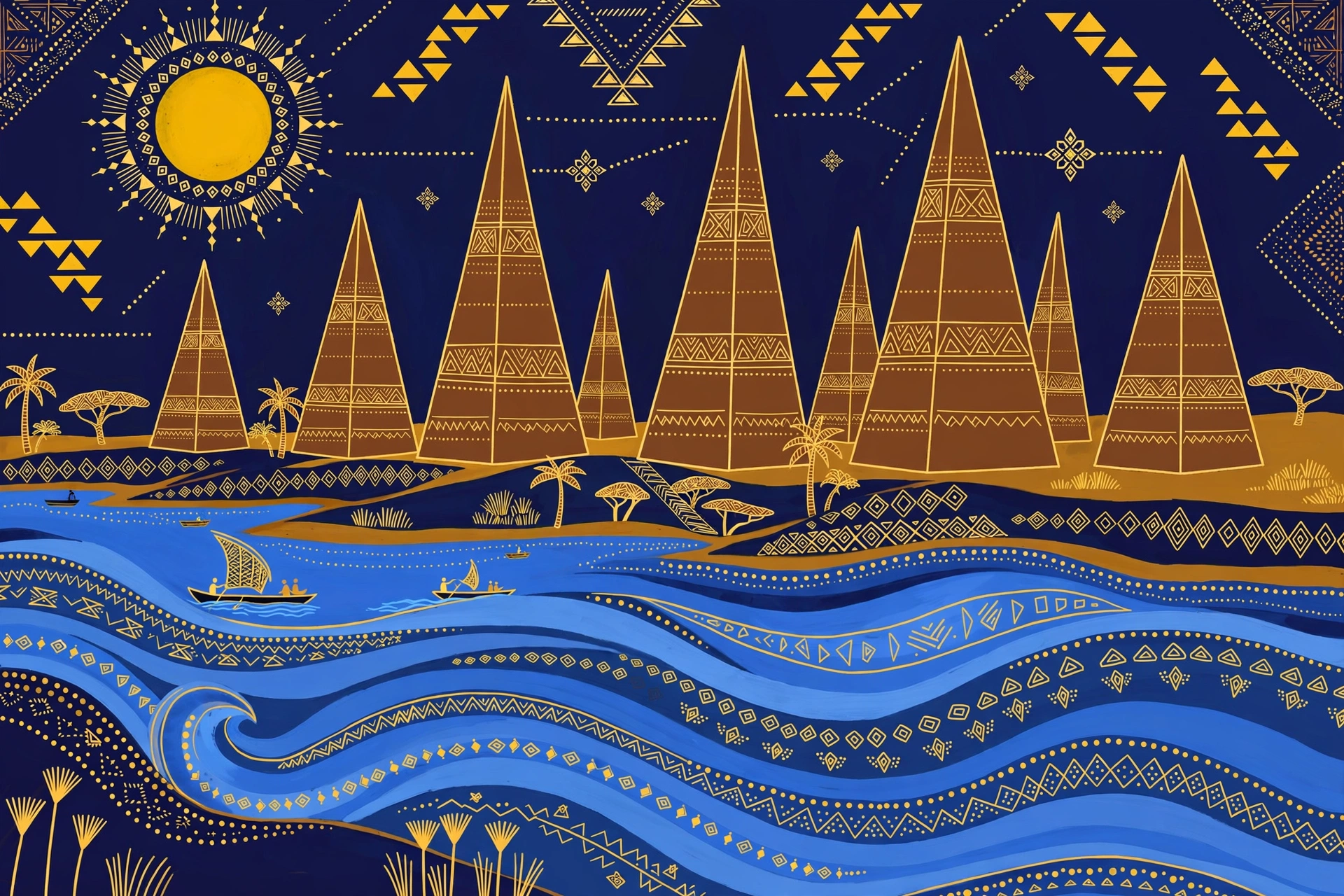
Nubia is the ancient land of the Nile valley, stretching through what is today southern Egypt and northern Sudan. It is among the earliest civilizations of Africa — a land of gold mines, river trade, and temple cities, known across the ancient world as the Land of Gold. Its people farmed the banks of the Nile, worked gold and ebony and ivory, and raised monuments that still stand in the desert sand.
THE KINGDOM OF KUSH
From Nubia rose the Kingdom of Kush, one of the great powers of the ancient world. Kushite kings ruled from Kerma, from Napata beneath the sacred mountain of Jebel Barkal, and from Meroë, a city of temples, iron works, and pyramids. In the eighth century before Christ, the kings of Kush ascended the throne of Egypt itself as the Twenty-Fifth Dynasty, uniting the Nile under Nubian rule. The pyramids of Meroë still stand in the Sudan today, and the Meroitic script of Kush remains one of the ancient world's enduring monuments of writing.
HISTORY OF THE NUBIAN KINGDOM
Nubia’s story is not a chapter in anyone else’s book. Along the Nile south of Egypt, Nubian kingdoms rose, endured, fell, and rose again across five thousand years — builders of pyramids, masters of gold, pharaohs of Egypt itself, and keepers of a Christian realm that stood for a thousand years. This is that story, in its order.
KERMA — THE FIRST KINGDOM
The first kingdom of Nubia rises at Kerma, south of the Third Cataract: a wealthy city of temples, workshops, and great tumulus tombs, trading gold, ivory, ebony, and cattle down the Nile.
UNDER EGYPT
Egypt’s New Kingdom pharaohs hold Nubia as the province of Kush. Nubian gold fills Egypt’s treasury and Nubian archers serve in its armies, while Egypt’s temples rise along the Nubian Nile.
THE KINGDOM OF KUSH AT NAPATA
Kush stands independent again, ruled from Napata beneath Jebel Barkal, the holy mountain of Amun — a Nubian kingdom in its own right, heir to Kerma and master of the middle Nile.
THE TWENTY-FIFTH DYNASTY
Piye of Kush conquers Egypt, and his house — Shabaka, Shebitku, Taharqa, Tanutamani — rules the whole Nile as pharaohs of Egypt: the Kushite dynasty, Nubian kings on the oldest throne of the river.
MEROË — THE CITY OF PYRAMIDS
The capital moves south to Meroë. Kings and reigning queens — the Candaces of Kush — are laid beneath steep pyramids in the royal cemeteries; the Meroitic script is written; iron is smelted, and trade runs from the Nile to the Red Sea.
THE CHRISTIAN KINGDOMS
Nobatia, Makuria, and Alodia: three Christian Nubian kingdoms endure for nearly a thousand years — cathedrals painted with Nubian saints, monasteries on the river cliffs, and the Baqt, Makuria’s treaty with Egypt, keeping the peace for some six centuries.
THE FUNJ SULTANATE
The Funj rule from Sennar, a great sultanate of the Blue Nile — the last royal house of the old Nubian world before the Turco-Egyptian conquest of 1821.
THE SAVING OF NUBIA
When the Aswan High Dam’s lake rises over the old land, the world answers: UNESCO’s International Campaign saves Nubia’s monuments stone by stone — the chapter told in full in UNESCO & the Saving of Nubia, below.
THE REBORN KINGDOM
The Kingdom of Nubia stands again — a heritage and cultural institution of the Al Mahdi Dynasty, its Embassy in the Americas seated in Boston, the story carried forward by the Nubians of the Americas.
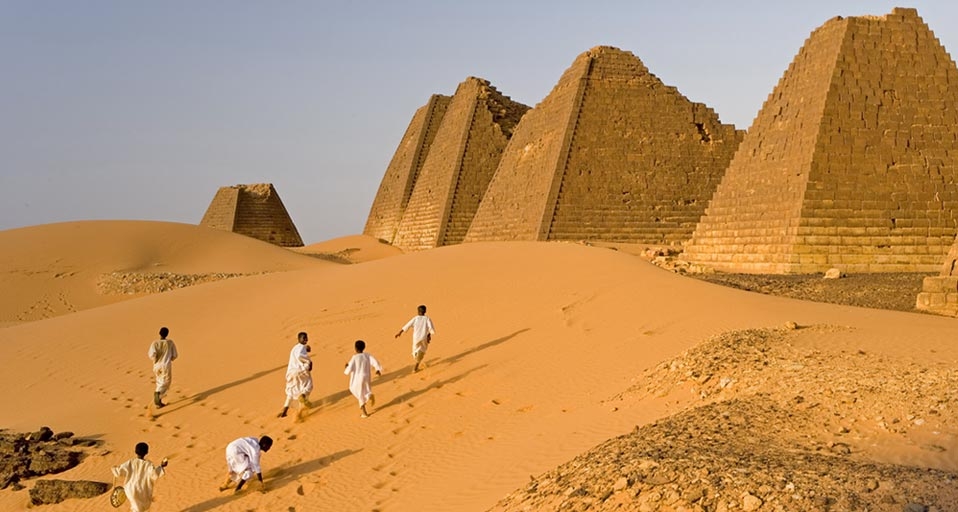
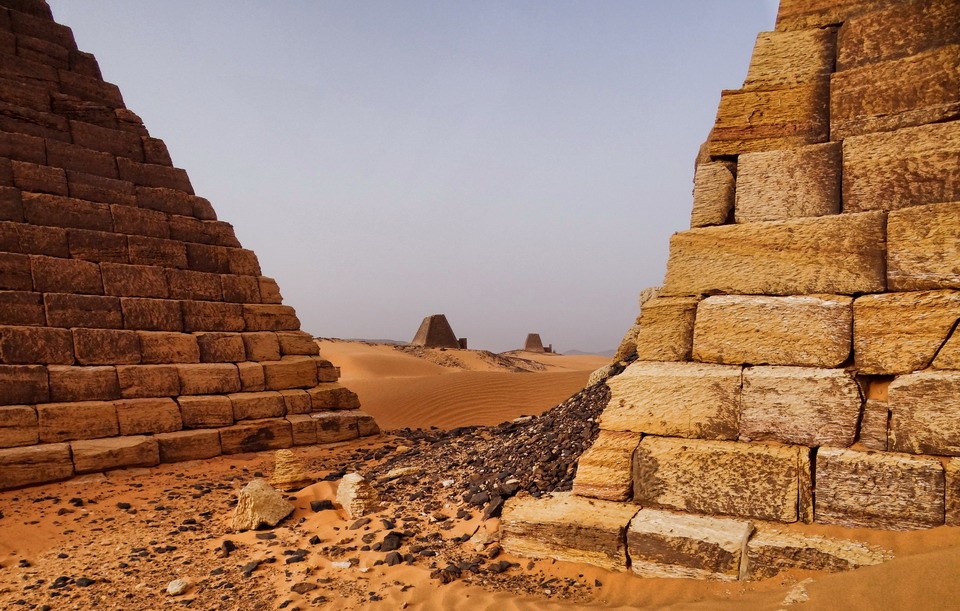
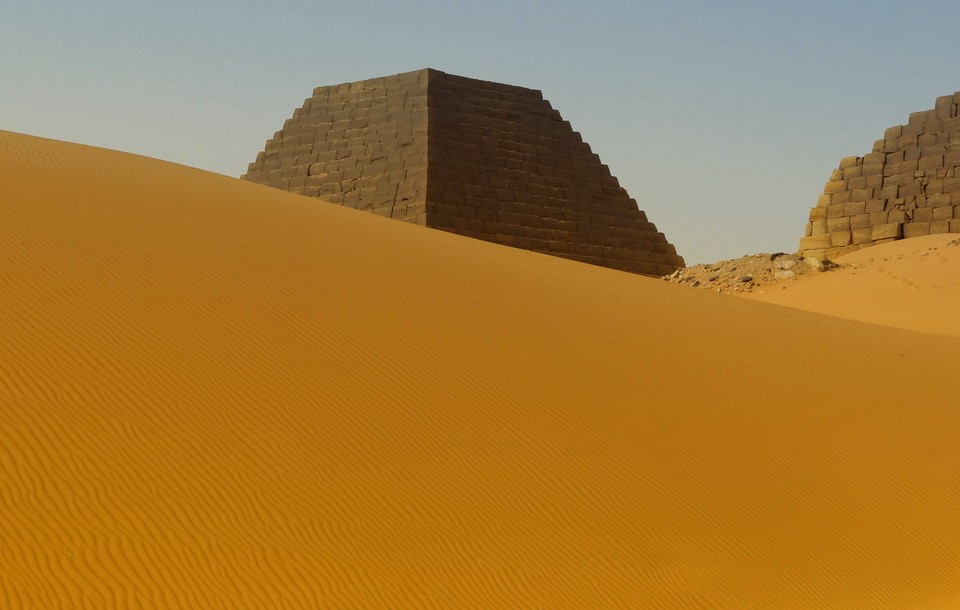
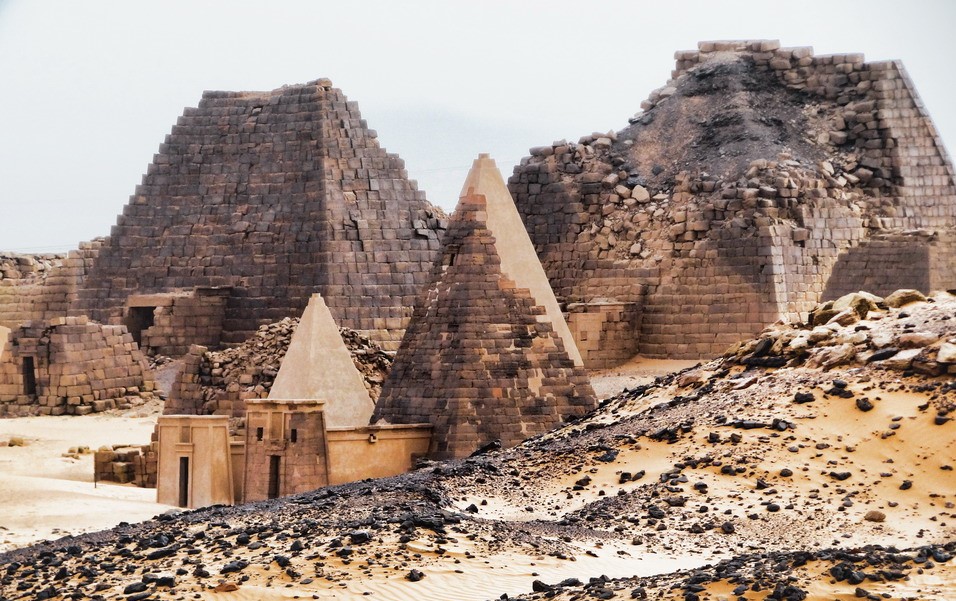
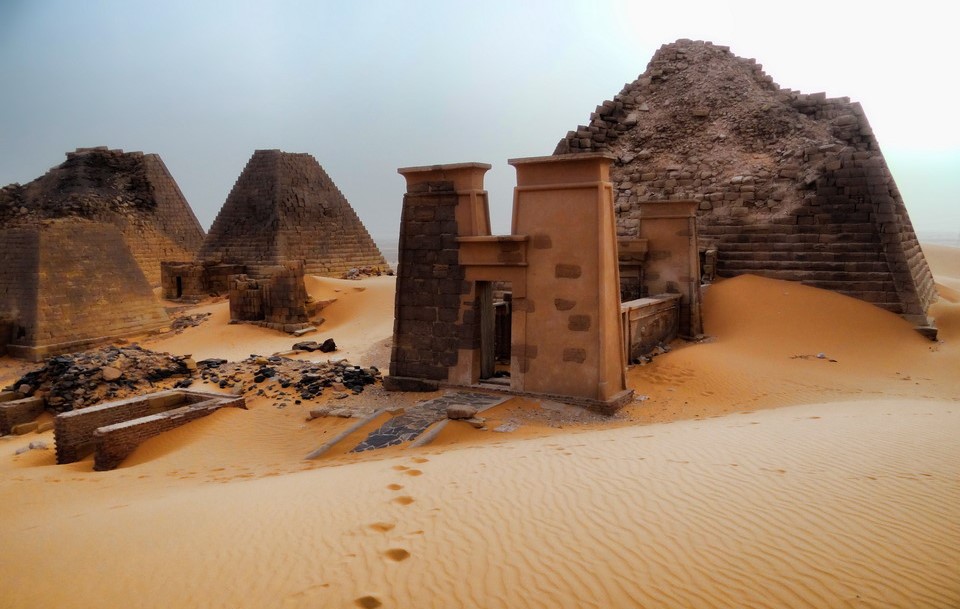
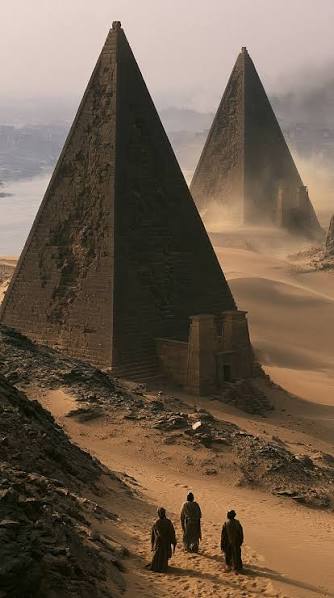 MEROË TODAY — THE ROYAL PYRAMIDS, PHOTOGRAPHED IN OUR OWN TIME
SOURCES & CITATIONS
- UNESCO World Heritage Centre, Archaeological Sites of the Island of Meroe (List No. 1336, inscribed 2011) — the royal city of Meroë, its pyramid cemeteries, Naqa, and Musawwarat es-Sufra.
- UNESCO World Heritage Centre, Gebel Barkal and the Sites of the Napatan Region (List No. 1073, inscribed 2003) — Napata and the holy mountain of the Kushite kings.
- The Metropolitan Museum of Art, Heilbrunn Timeline of Art History — the kingdoms of Kerma, Kush, and the Twenty-Fifth Dynasty of Egypt.
- Derek A. Welsby, The Medieval Kingdoms of Nubia (British Museum Press, 2002) — Nobatia, Makuria, and Alodia, and the Baqt.
- Encyclopaedia Britannica, “Funj” — the Funj Sultanate of Sennar, 1504–1821.
- UNESCO World Heritage Centre, Nubian Monuments from Abu Simbel to Philae (List No. 88, inscribed 1979) — and the International Campaign to Save the Monuments of Nubia, 1960–1980.
THE BATTLES OF SUDAN — A REGISTER OF WAR & INVASION
This register is kept in a neutral hand: it records, and does not celebrate. Sudan’s soil has been marched over by the armies of pharaohs and of Rome, of caliphs and of sultans, by Turco-Egyptian columns, Mahdist hosts, Anglo-Egyptian armies, and Italian divisions — and in the modern age it has been torn by its own civil wars. These are the principal battles and foreign invasions of the documented record, set in their order.
EGYPT CONQUERS KUSH
The armies of Egypt’s New Kingdom, under Thutmose I and his successors, overrun the kingdom of Kerma and carry Egyptian rule to the Fourth Cataract and beyond. Nubia becomes Egypt’s province of Kush, held for four centuries.
ROME AT NAPATA
After Kushite forces strike the Roman frontier at Syene, the Roman prefect Petronius marches south and sacks Napata. The frontier is then settled by negotiation — Rome does not hold Nubia.
THE FIRST BATTLE OF DONGOLA
An Arab army out of newly conquered Egypt advances into Makuria and is repulsed before Dongola. Arab writers themselves record the skill of the Nubian archers — one of the few defeats of the first century of Arab expansion.
THE SECOND BATTLE OF DONGOLA — THE BAQT
A second, greater invasion besieges Dongola and bombards it with catapults, but the citadel holds. The two sides conclude the Baqt, a treaty of peace and exchange that endures, with interruptions, for some six centuries.
THE MAMLUK EXPEDITIONS
Mamluk armies from Egypt reach Dongola in 1276, and a Mamluk-backed occupation follows in 1312. The Christian kingdom of Makuria, a thousand years old, enters its long decline.
KORTI & JABAL AL-DAYQA — THE CONQUEST BEGINS
Muhammad Ali of Egypt sends his son Ismail Kamil Pasha south. The Shaygiyya confederation meets the invasion at Korti on 4 November 1820 and again at Jabal al-Dayqa on 4 December; Turco-Egyptian firearms and artillery decide both days.
THE FALL OF SENNAR
The last Funj sultan surrenders Sennar without a great battle. The Turco-Egyptian conquest of the riverain Sudan is complete, and sixty years of foreign rule — the Turkiyya — begin.
ABA ISLAND
Government troops sent to arrest Muhammad Ahmad, the self-proclaimed Mahdi, are defeated on Aba Island in the White Nile. The Mahdist revolt has begun.
SHAYKAN — THE DESTRUCTION OF HICKS PASHA
An Egyptian army of some ten thousand under the retired British officer William Hicks, marching to retake Kordofan, is ambushed and annihilated at Shaykan, near El Obeid. After Shaykan, Egypt cannot hold the Sudan.
THE SIEGE OF KHARTOUM
The Mahdi’s forces besiege Khartoum for ten months. The city falls on 26 January 1885; General Charles Gordon, its defender, is killed. The British relief expedition arrives two days too late.
ABU KLEA
On the desert march to the Nile, the British Desert Column is attacked at the wells of Abu Klea on 16–18 January 1885. The Mahdist charge breaks into the British square before it is driven off — the relief column fights through, at heavy cost on both sides.
KIRBEKAN
The river column of the relief expedition storms the Mahdist heights at Kirbekan on the Nile; its commander, General Earle, is killed in the victory. The expedition then withdraws — Sudan is left to the Mahdist state.
GINNIS
Anglo-Egyptian troops defeat a Mahdist force at Ginnis, south of Wadi Halfa — the last battle of the relief era. The frontier of Egypt settles at Halfa, facing the Mahdist state to the south.
SUAKIN
Near the Red Sea port of Suakin, General Grenfell defeats the eastern Mahdist forces of Osman Digna, who had held the coast country against Egypt for five years.
GALLABAT — THE WAR WITH ETHIOPIA
At Gallabat (Metemma), on the Ethiopian frontier, Mahdist forces defeat the army of Ethiopia; the Emperor Yohannes IV is killed on the field. It is the Mahdist state’s greatest victory abroad.
TOSKI
The Mahdist commander Wad al-Nujumi marches north to carry the revolution into Egypt itself. An Egyptian army destroys his force at Toski, on the frontier below Wadi Halfa; al-Nujumi is killed.
FERKEH — THE RECONQUEST OPENS
Kitchener’s Anglo-Egyptian army surprises and destroys the Mahdist force at Ferkeh (Firket) at dawn. The Dongola campaign — the reconquest of Sudan — has begun.
THE ATBARA
On the banks of the Atbara River, Kitchener storms the entrenched camp of the Emir Mahmud Ahmad and destroys his army — the last great force between the Anglo-Egyptian army and Omdurman.
OMDURMAN — KARARI
On the plain of Karari north of Omdurman, the Khalifa Abdallahi’s army charges Kitchener’s rifles, machine guns, and artillery across open ground and is destroyed, with very heavy loss. The Mahdist state falls; the Anglo-Egyptian condominium follows.
UMM DIWAYKARAT
The Khalifa, fled to Kordofan after Omdurman, makes his last stand at Umm Diwaykarat and is killed with his emirs around him. The Mahdist war is over.
KASSALA & GALLABAT TAKEN — THE ITALIAN INVASION
Italy, at war with Britain, invades Sudan from Italian East Africa: its forces occupy Kassala on 4 July 1940 and take the fort at Gallabat on the Ethiopian frontier, against small Sudan Defence Force garrisons.
THE COUNTER-OFFENSIVE
Commonwealth forces, the Sudan Defence Force among them, retake Kassala and Gallabat and drive the Italian armies back into Eritrea, where the campaign is decided at Agordat and Keren. Sudan is not invaded again.
THE FIRST CIVIL WAR
From the mutiny of southern soldiers at Torit in August 1955, on the eve of independence, Sudan’s first civil war runs seventeen years between the government in Khartoum and the Anyanya movement of the south. It ends with the Addis Ababa Agreement of 1972.
THE SECOND CIVIL WAR
A second, longer civil war between Khartoum and the Sudan People’s Liberation Army consumes the south, the Nuba Mountains, and the southern Blue Nile for twenty-two years. It ends with the Comprehensive Peace Agreement of 2005 — and, in 2011, with the independence of South Sudan.
THE WAR IN DARFUR
In 2003 war erupts in Darfur, in Sudan’s west, between the government and Darfuri rebel movements. The fighting, and the displacement that follows it, continue in waves across the region in the years after.
THE WAR IN KHARTOUM
On 15 April 2023 war breaks out in Khartoum between the Sudanese Armed Forces and the Rapid Support Forces, and spreads across the capital and the country. At the time this register is written, the war continues, and the record stands open.
SOURCES & CITATIONS
- World History Encyclopedia, “Mahdist War” — Aba, Shaykan, the Siege of Khartoum, Abu Klea, Ginnis, Toski, Gallabat, Ferkeh, the Atbara, Omdurman, and Umm Diwaykarat. worldhistory.org/Mahdist_War
- Emanuel Beška, “Muhammad Ali’s Conquest of Sudan (1820–1824),” Asian and African Studies 28:1 (2019) — Korti, 4 November 1820; Jabal al-Dayqa, 4 December 1820; the surrender of Sennar, June 1821.
- “Makuria” — the First and Second Battles of Dongola (642; 651–652) and the Baqt. en.wikipedia.org/wiki/Makuria; and Derek A. Welsby, The Medieval Kingdoms of Nubia (British Museum Press, 2002), cited above.
- “Military history of Sudan” — the register’s modern span: the Italian invasion of 1940 and the counter-offensive of 1941; the civil wars of 1955–1972 and 1983–2005; Darfur; and the war of 2023. en.wikipedia.org/wiki/Military_history_of_Sudan
- P. M. Holt & M. W. Daly, A History of the Sudan: From the Coming of Islam to the Present Day — the general scholarly authority for the Turkiyya, the Mahdiyya, and the condominium.
- Strabo, Geography, Book 17 — the Roman campaign of Petronius and the sack of Napata, c. 24 BCE; and the Metropolitan Museum of Art, Heilbrunn Timeline, for Egypt’s New Kingdom conquest of Kush, cited above.
MEROË — THE ROYAL NECROPOLIS
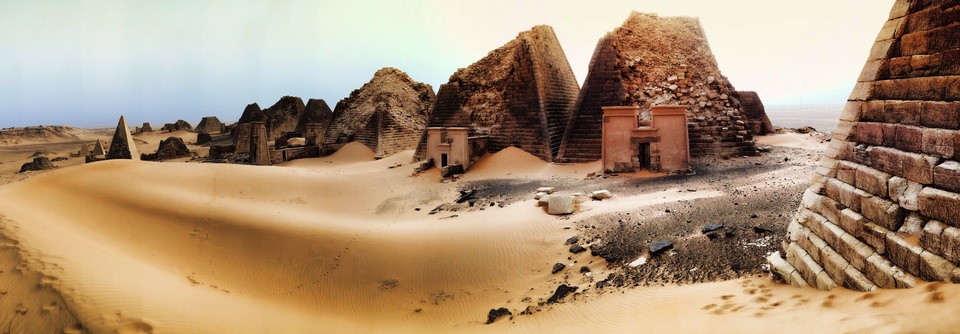
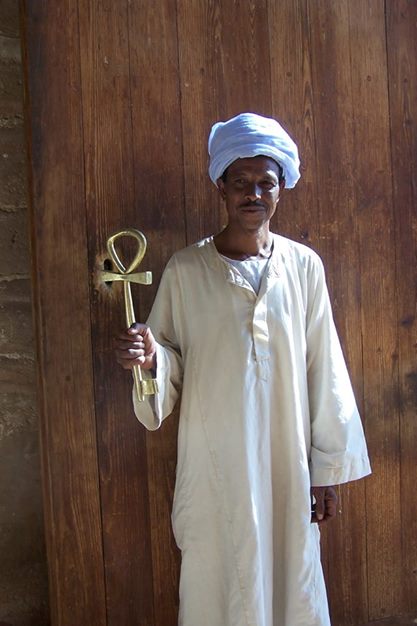
East of the Nile, some two hundred kilometres north-east of Khartoum, stand the pyramids of Meroë — the royal necropolis of the Kingdom of Kush in its Meroitic age. Here the kings and queens of Kush were laid to rest beneath steep-sided pyramids, smaller and sharper than those of Egypt, each fronted by its own offering chapel. Sudan holds more pyramids than Egypt: over two hundred Nubian pyramids still stand along the Nile. In 2011 the Archaeological Sites of the Island of Meroe were inscribed on the UNESCO World Heritage List.
SOURCES & CITATIONS
- UNESCO World Heritage Centre, Archaeological Sites of the Island of Meroe — World Heritage List No. 1336, inscribed 2011: the Royal City of Meroë, its pyramid cemeteries, Naqa, and Musawwarat es-Sufra.
- On the pyramid count: Sudan’s Nubian pyramids number over two hundred — more than survive in Egypt — as documented in the UNESCO listing and the National Corporation for Antiquities and Museums (NCAM), Sudan.
The Kingdom · From the Archive
FROM THE EXPEDITION ALBUM
One plate is kept from the drawing-board age, in a small frame: the necropolis at Meroë as the expedition of Frédéric Cailliaud drew it in the 1820s, published in Voyage à Méroé (1826). It hangs here as an archive piece, plainly captioned — the photographs on this page carry the field as it stands today.
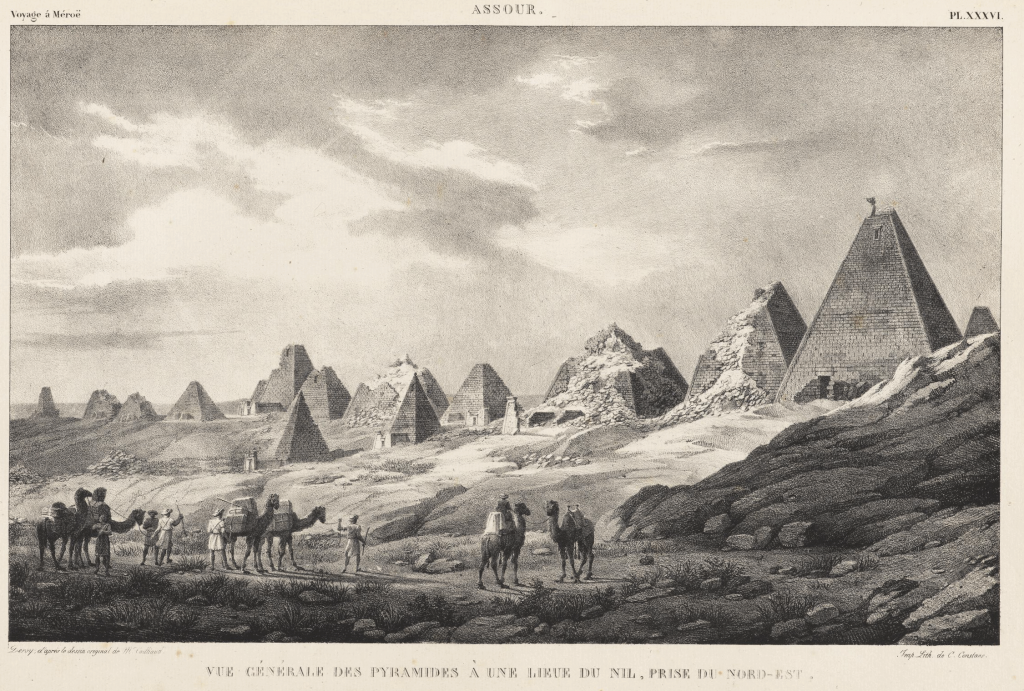 EXPEDITION DRAWING, 1826 — THE GENERAL VIEW OF MEROË
Frédéric Cailliaud, Voyage à Méroé (1826). Public domain.
THE ROYAL HOUSE — THE AL MAHDI DYNASTY
The Kingdom of Nubia does not stand alone. Above it stands its royal house: the Al Mahdi Dynasty — the top tier of the family construct, beneath which the Kingdom and its sister ventures sit in order. The Dynasty is the house; the Kingdom is one of its crowns in the West.
The Dynasty’s own record at the United Nations: its Trust’s profile stands listed in the UN DESA Civil Society (iCSO) database, accepted October 1, 2026 — a listing, plainly stated, that is not accreditation and not ECOSOC status. The Dynasty’s own website is in preparation; when its address is live, this page will carry the door.
 Shaykh As-Sayyid Imam Ali Abdullah Muhammed — head of the Kingdom under the Dynasty.
UNESCO & THE SAVING OF NUBIA
When the Aswan High Dam was built, the rising waters of its great lake threatened to drown the monuments of Nubia — temples, tombs, and whole chapters of the human story along the Nile. Egypt and Sudan asked the world for help, and the world answered. On 8 March 1960, UNESCO’s Director-General, Vittorino Veronese, launched the International Campaign to Save the Monuments of Nubia — a rescue carried on for twenty years, until 1980, with some fifty nations taking part.
The rescue itself has no equal. At Abu Simbel, the two temples of Ramesses II were cut apart block by block and raised to higher ground between 1964 and 1968, and inaugurated in their new place on 22 September 1968. The island temples of Philae were moved stone by stone to a new island home. In all, twenty-two monuments and complexes were saved. And in gratitude, Egypt gave temples to nations that had stood with Nubia: Dendur to the United States, where it stands today at the Metropolitan Museum of Art in New York; Debod to Spain; Taffeh to the Netherlands; and Ellesyia to Italy — so that a piece of Nubia keeps watch in the cities of the world.
The campaign’s legacy is larger than Nubia itself: it gave birth to the very idea of World Heritage. The World Heritage Convention followed in 1972, and in 1979 the Nubian Monuments from Abu Simbel to Philae were inscribed on the World Heritage List. The world once moved its mountains to save Nubia — the Kingdom keeps that memory, and counts it among its own heritage chapters: proof, in stone, that Nubia belongs to the whole human family.
- UNESCO World Heritage Centre, Working Together: Abu Simbel — the International Campaign to Save the Monuments of Nubia, launched 8 March 1960 by Director-General Vittorino Veronese at the request of Egypt and Sudan; carried on 1960–1980; 22 monuments and complexes saved, by 40 technical missions; some 50 countries contributing; Abu Simbel inaugurated in its new location on 22 September 1968.
- UNESCO World Heritage Centre, Nubian Monuments from Abu Simbel to Philae — World Heritage List No. 88, inscribed 1979; the campaign from which the World Heritage Convention of 1972 was born.
- UNESCO — the temples of gratitude given by Egypt to contributing nations: Dendur to the United States (Metropolitan Museum of Art, New York), Debod to Spain, Taffeh to the Netherlands, Ellesyia to Italy.
- The Omar Ibn Said Collection — the 1831 Arabic autobiography and the manuscripts in his hand. Library of Congress. loc.gov/item/2018371864
- “York” and “The Vote at Station Camp” — U.S. National Park Service, Lewis & Clark National Historic Trail. home.nps.gov/people/york · nps.gov
- “Muslim Culture on the Georgia Sea Islands” — Lowcountry Digital History Initiative, College of Charleston (Bilali Mohammed of Sapelo). ldhi.library.cofc.edu
- “The Bilali Document” — the thirteen-page Arabic manuscript at the Hargrett Rare Book & Manuscript Library, University of Georgia. en.wikipedia.org/wiki/Bilali_Document
- “Prince Abdul Rahman Ibrahima Sori (1762–1829)” — BlackPast. blackpast.org; and Terry Alford, Prince Among Slaves (Oxford University Press, 1977).
- “Yarrow Mamout” — Archives of Maryland, Biographical Series (Maryland State Archives). msa.maryland.gov
- Sylviane A. Diouf, Servants of Allah: African Muslims Enslaved in the Americas (New York University Press, 1998; 2013) — the standing scholarship for the Diallo portrait and the lives in this section.
- Allan D. Austin, African Muslims in Antebellum America (1984; Routledge, 1997) — transcriptions and accounts of the Arabic documents.
THE KINGDOM TODAY
The Kingdom of Nubia today is a heritage and cultural institution: the house charged with keeping the Nubian story — its history, its dignity, and its memory — and carrying it to new generations, above all in the Americas, where its Embassy is seated in Boston, Massachusetts.
The Kingdom is one of the ventures of the Al Mahdi Dynasty, held under the Al Mahdi Dynasty Trust, and is led by Shaykh As-Sayyid Imam Ali Abdullah Muhammed. Its work is heritage preservation, education, cultural diplomacy, and service to the community.
OF THE FAITH, IN BONDAGE — MUSLIMS AMONG THE ENSLAVED IN AMERICA
The faith crossed the ocean in chains and kept itself alive in a new land. Among the millions of Africans carried to America were Muslims — scholars, teachers, and believers — whose Arabic writing, open prayers, and painted portraits survive in the record. These cards carry their documented lives, dressed in the same Nubian decoration as the Advocacy peoples.
◆ YORK — THE EXPLORER (c. 1770 – after 1815)
THE RECORD
Enslaved by William Clark, York was the only African American member of the Lewis and Clark Corps of Discovery (1804–1806). The captains’ journals show him hunting with a gun — a trust rarely given — labouring beside the men, and nursing Sergeant Charles Floyd in his last illness; he risked his life to save Clark, Sacagawea, and her son from a flash flood. In November 1805, at the Pacific, the captains polled the whole party on the winter camp, and York’s vote was recorded beside every other man’s. On the return, every member but York received double pay and land; York returned to slavery, and Clark refused his pleas for freedom for years. He was freed sometime after 1815.
THE TRADITION OF THIS HOUSE
“In the tradition of this house, as Shaykh As-Sayyid Imam Ali Abdullah Muhammed states it: York was a Muslim of Nubian descent; his father was Ben (Ibn) York; he was half Muslim, half Native.”
So the house states it. The tradition is carried here as the house’s own word; the record above is what the documents hold — and the two lanes are kept apart.
◆ OMAR IBN SAID — NORTH CAROLINA (c. 1770–1864)
A Fula scholar of Futa Toro, in today’s Senegal, formed by twenty-five years of Islamic study. Captured in 1807 and carried to Charleston, he escaped a cruel enslaver, was found at prayer in Fayetteville, North Carolina, and was bought by James Owen, in whose household he remained enslaved for the rest of his life. In 1831 he wrote his autobiography in Arabic — the only known autobiography written in Arabic by an enslaved person in America. It survives, with the other Arabic manuscripts in his hand, in the Omar Ibn Said Collection of the Library of Congress.
◆ AYUBA SULEIMAN DIALLO — MARYLAND (c. 1701–1773)
Called Job Ben Solomon. A cleric’s son of Bundu, in the Senegambia, kidnapped in 1731 and shipped to Annapolis, Maryland, where he was put to tobacco work on Kent Island. His Arabic betrayed his learning: a letter he wrote in Arabic to his father crossed the ocean to London, reached James Oglethorpe, and bought his freedom. In London in 1733, William Hoare painted him in his own country’s dress, his Qur’an at his neck — among the earliest portraits of a named African sitter — and Diallo wrote out the Qur’an from memory. He returned to his homeland in 1734.
◆ BILALI MUHAMMAD — SAPELO ISLAND, GEORGIA (c. 1770–1857)
Born at Timbo in Futa Jallon, in today’s Guinea, and educated in Islam, Bilali was carried to Sapelo Island, where Thomas Spalding set him over hundreds as head driver. There he lived openly as a Muslim — the fez, the prayer rug, the fasts and feast days kept in public — and led the island’s Muslim community, passing his Fula tongue to his children. His thirteen-page Arabic manuscript, a work of Islamic belief and law drawn from the teaching of his homeland, is held by the University of Georgia; his descendants on Sapelo, Cornelia Bailey among them, carried his memory into our own time.
◆ ABDULRAHMAN IBRAHIM IBN SORI — MISSISSIPPI (1762–1829)
Called Prince. A Fula prince of Futa Djallon, son of its emir, captured in 1788 and sold to Thomas Foster near Natchez, Mississippi, who named him “Prince” in derision and held him forty years. A chance meeting with Dr. John Cox — whose life Sori’s father had once saved — began his recognition; his Arabic letter reached the Sultan of Morocco, and Secretary of State Henry Clay arranged his release. Freed on February 22, 1828, on condition he leave America, he sailed for Africa, knelt on his prayer mat when he reached Monrovia in March 1829, and died there within months, aged 67. Terry Alford’s Prince Among Slaves tells his story.
◆ YARROW MAMOUT — GEORGETOWN (c. 1736–1823)
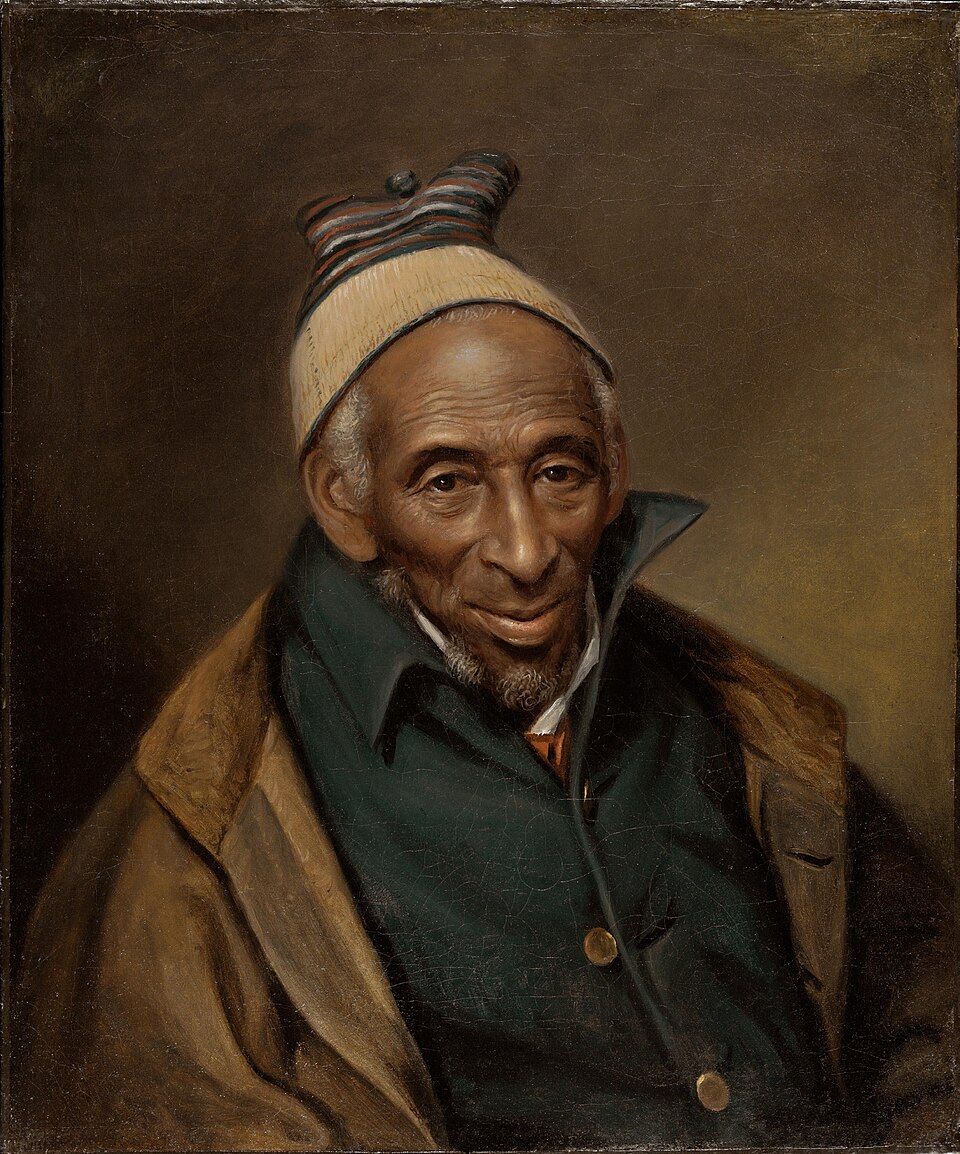
A Fulani Muslim from Guinea, literate in Arabic, carried to the colonies about 1752 and held forty-four years by the Beall family of Maryland. Freed in 1796, he bought his own house in Georgetown in 1800, held bank stock, and was known in its streets — Peale’s diary records him “often seen and heard in the streets singing praises to God.” In 1819 Charles Willson Peale painted him at his home: the earliest known painting of a Muslim in America, now at the Philadelphia Museum of Art. He died in Georgetown in 1823 and was buried in the garden where he used to pray.
HISTORICAL FACES — THE LIKENESSES THAT SURVIVE
Four of the men of this set were painted or photographed in their lifetimes, and their likenesses survive in public collections. The cards below carry those true portraits, each captioned with its own record. For the fifth, no likeness survives — and his card says so.
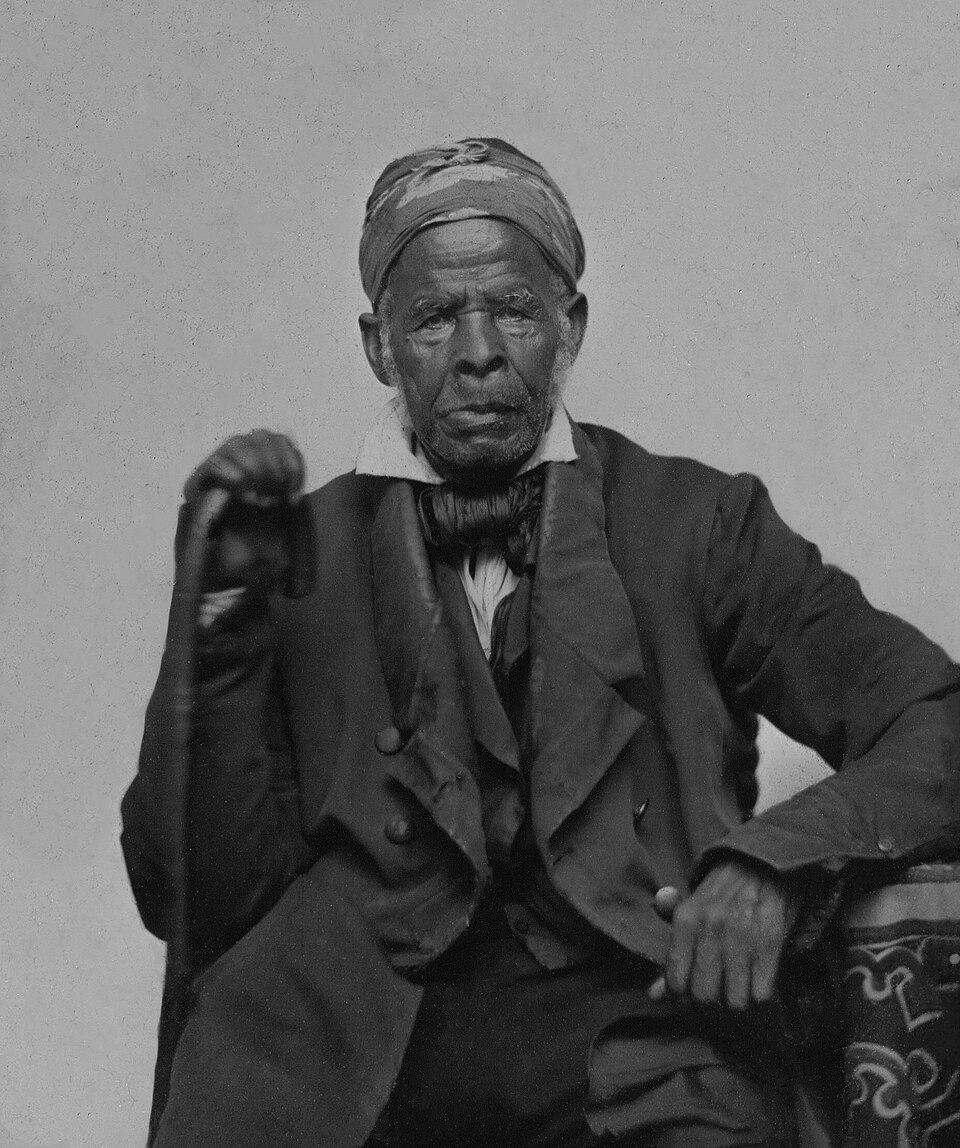
OMAR IBN SAID
The likeness identified as Omar ibn Said in his old age — ambrotype, c. 1850, its manuscript note naming him a slave “of great notoriety” in North Carolina. Beinecke Rare Book & Manuscript Library, Yale University. Public domain, via Wikimedia Commons.
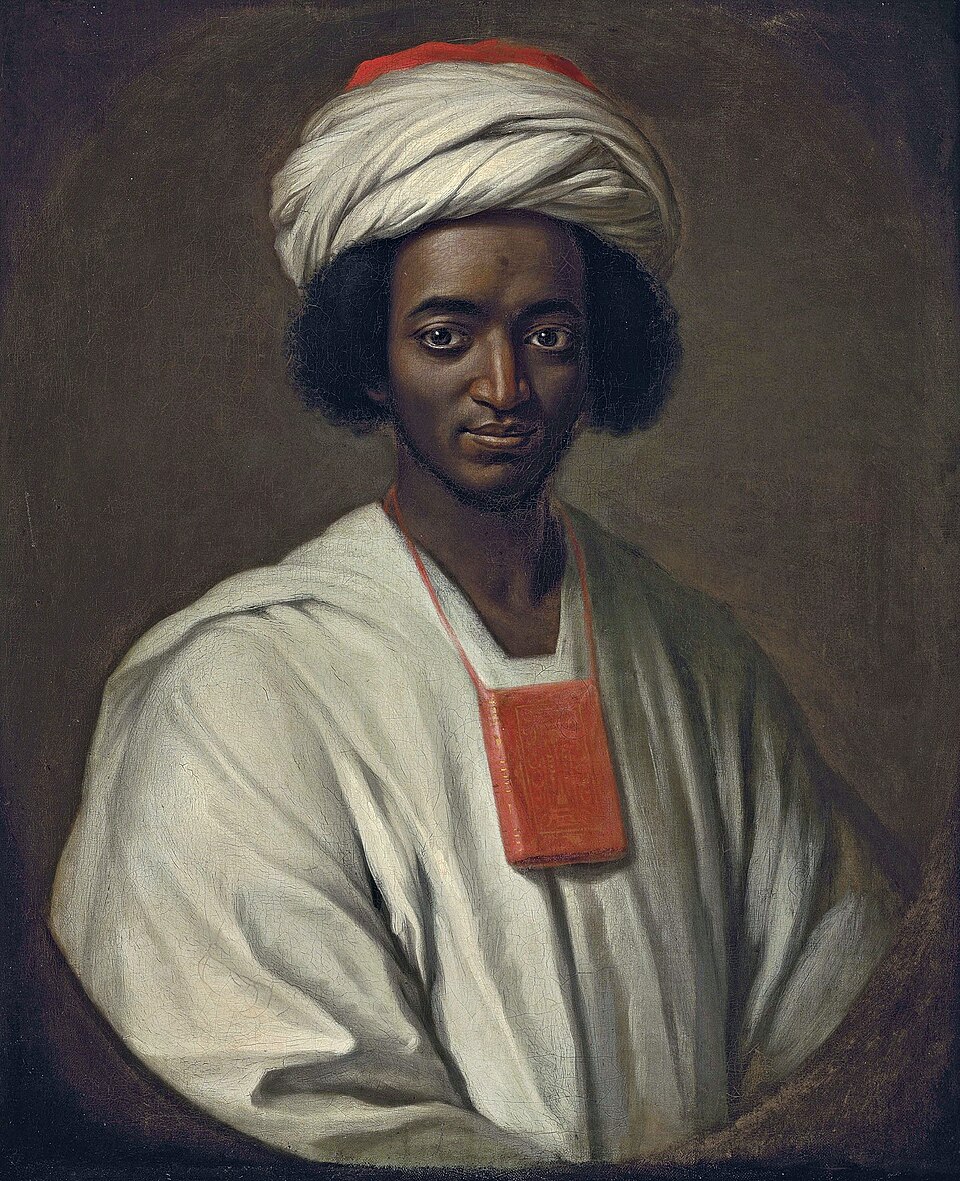
AYUBA SULEIMAN DIALLO
By William Hoare of Bath, 1733 — the sitter in his own dress, his Qur’an at his neck. The painting is held by the Qatar Museums and shown on loan at the National Portrait Gallery, London. Public domain, via Wikimedia Commons.
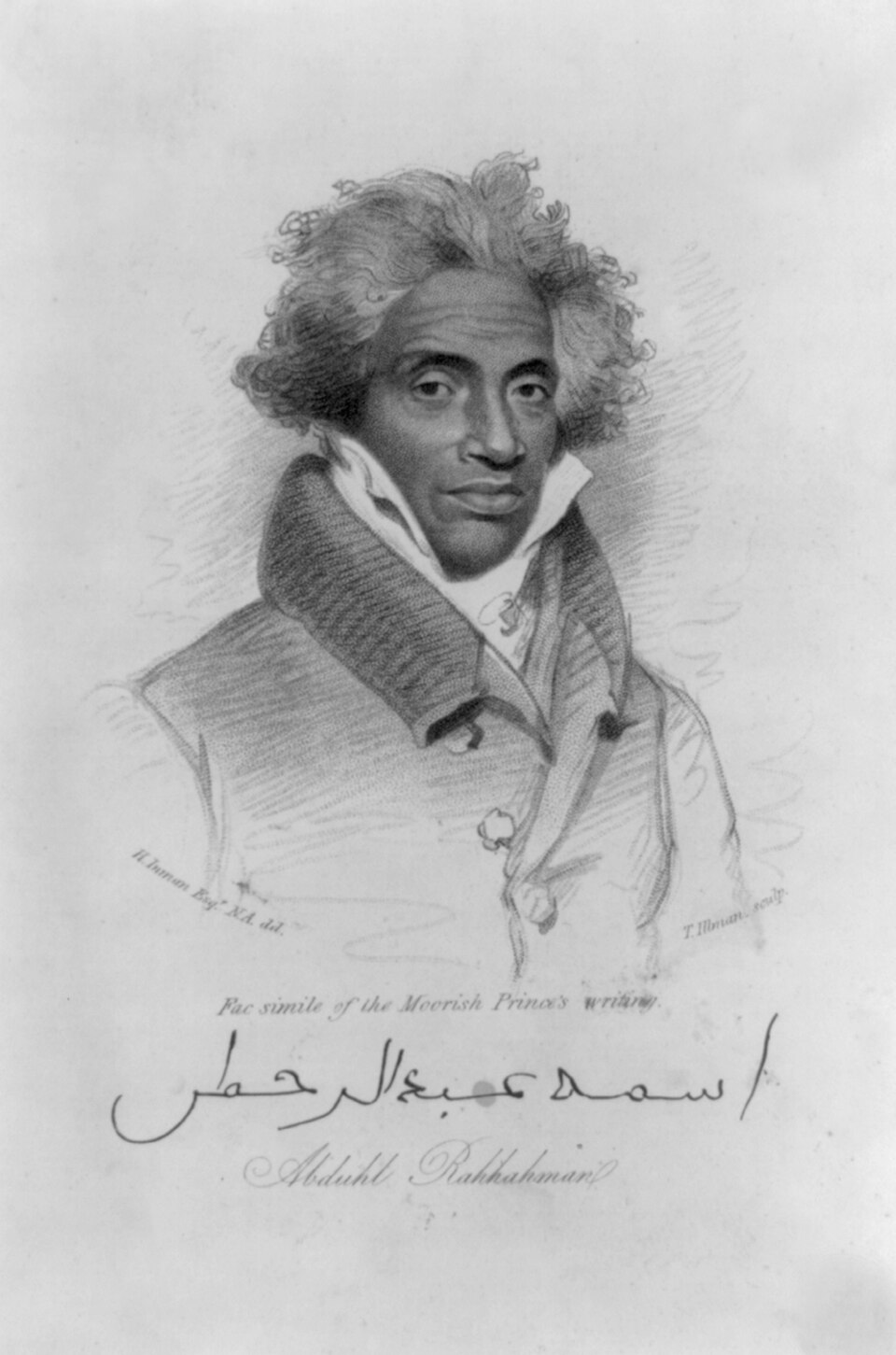
ABDULRAHMAN IBRAHIM IBN SORI
“Abduhl Rahhahman” — stipple engraving by Thomas Illman after the drawing by Henry Inman, from the portrait of 1828, the year of his freedom. Library of Congress. Public domain, via Wikimedia Commons.
YARROW MAMOUT
By Charles Willson Peale, 1819 — painted at the sitter’s Georgetown home, the earliest known painting of a Muslim in America. Philadelphia Museum of Art. Public domain, via Wikimedia Commons.

BILALI MUHAMMAD
No likeness of him survives. His face is carried by his Arabic manuscript and by his descendants on Sapelo Island, not by any portrait — so the Kingdom’s emblem stands in his place.
THE 5 FACES — INDIGENOUS NUBIAN MUSLIMS OF THE AMERICAS
These are the faces of a people — portraits drawn for this gallery, the generations of Nubian Muslims in the Americas. They are illustrations, painted for this page: no real person’s likeness is shown, and no ancestor is impersonated.
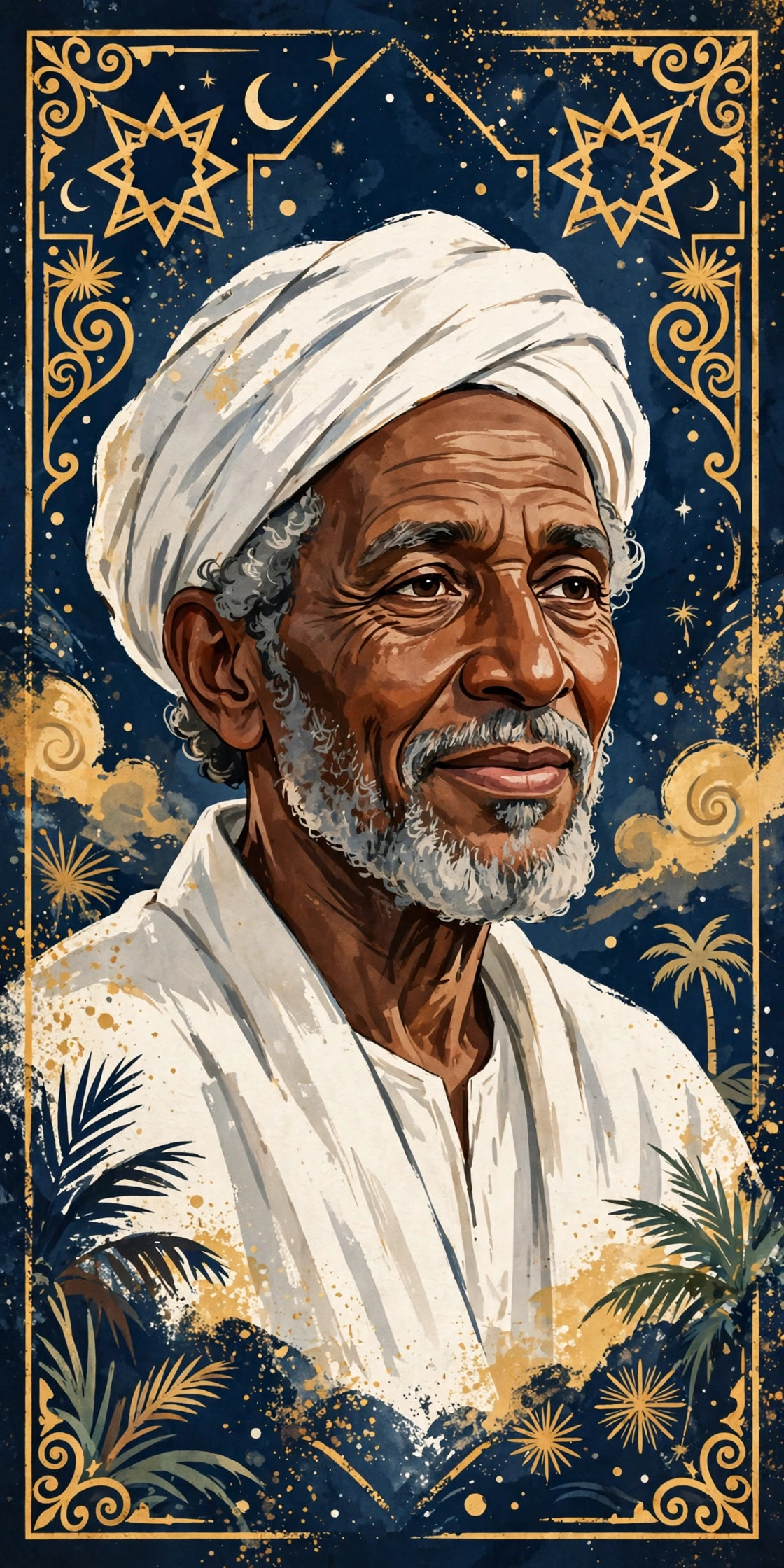
THE FIRST GENERATION
THE ELDER
The faith carried across the ocean — and kept.
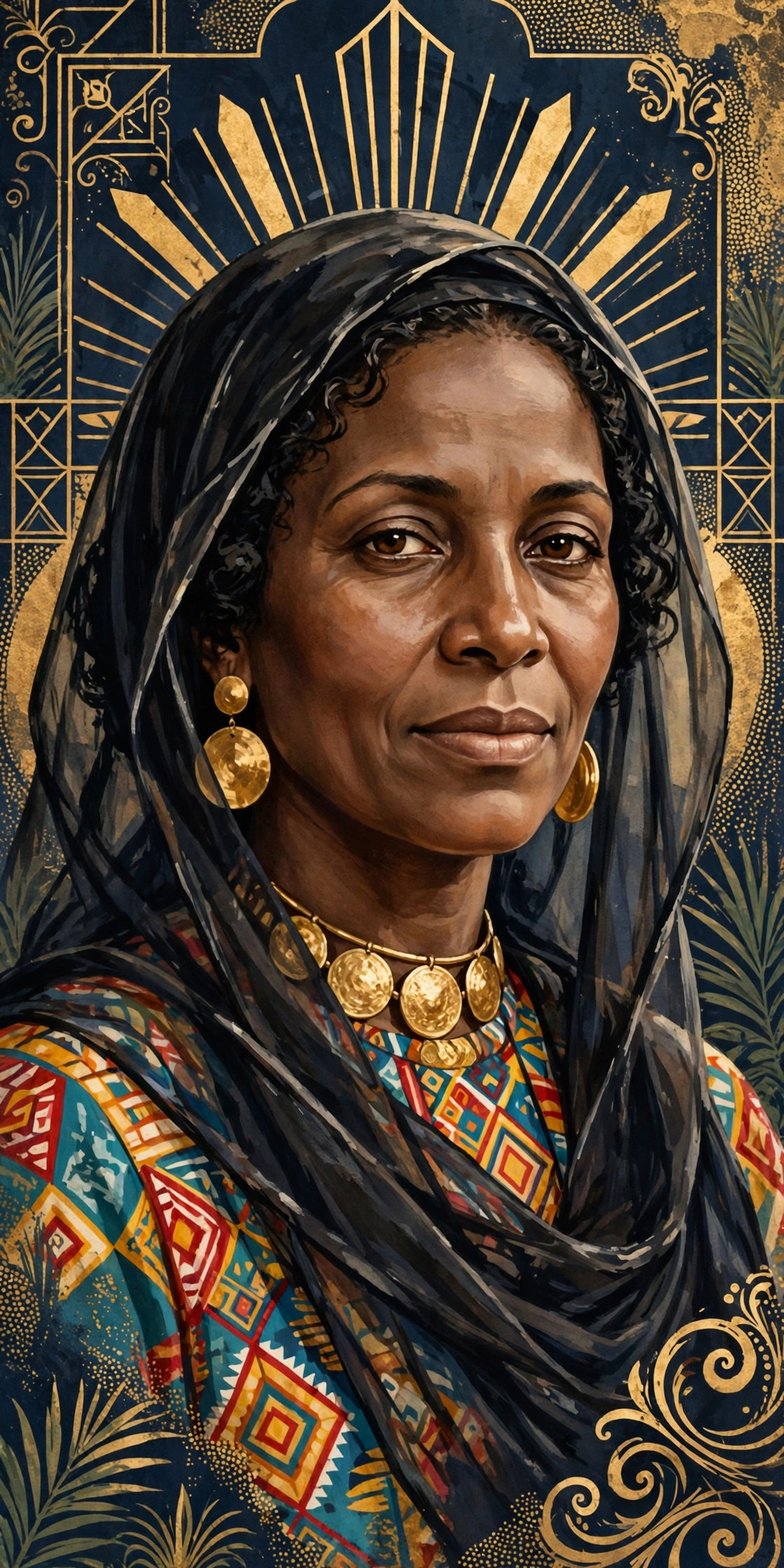
THE KEEPER OF THE HOUSE
THE MOTHER
The girgar and the gold — the home held together by her hands.
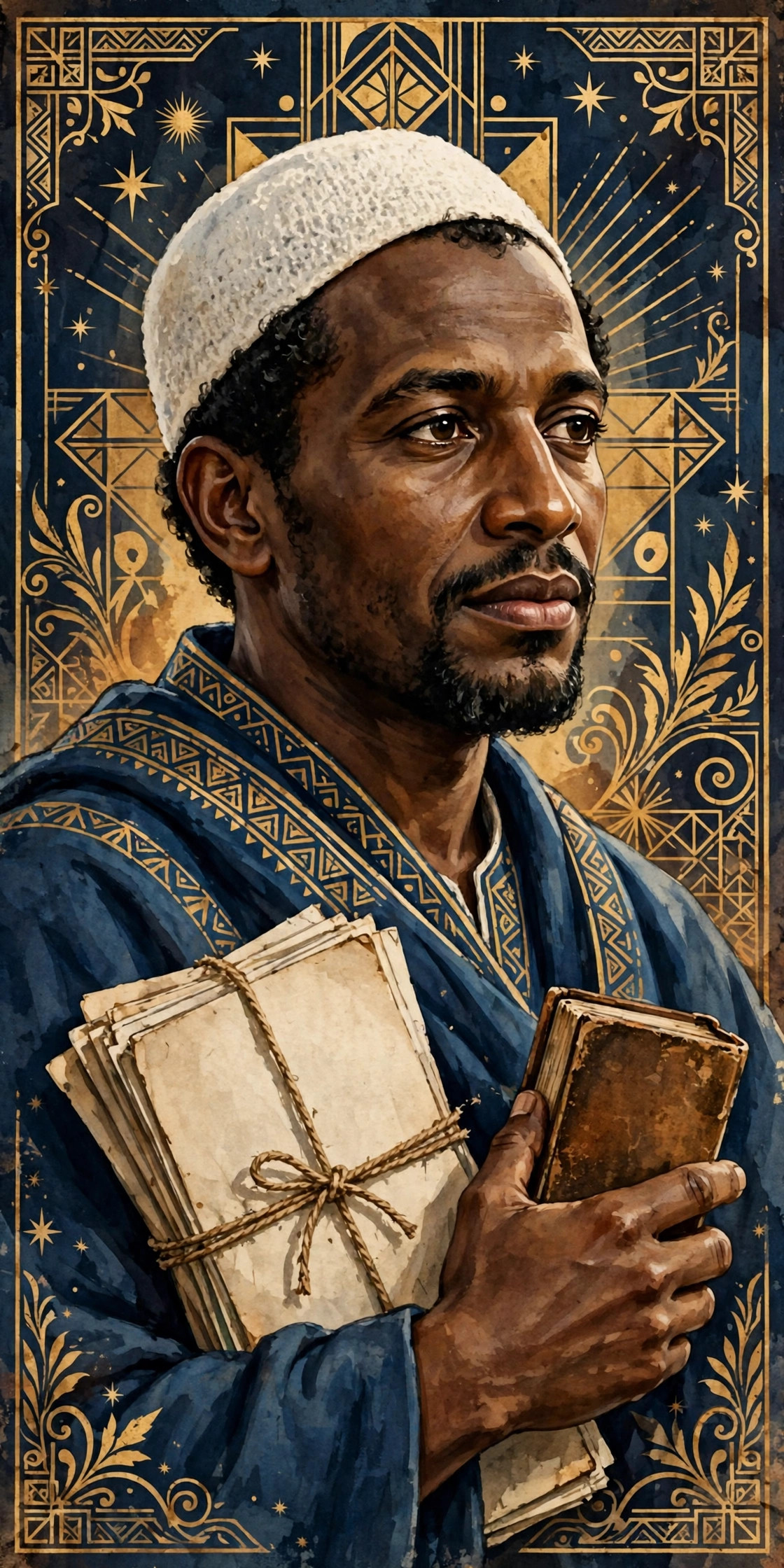
THE LETTERS
THE KEEPER OF THE LANGUAGE
His letters cross the water still — the tongue and the script, guarded.
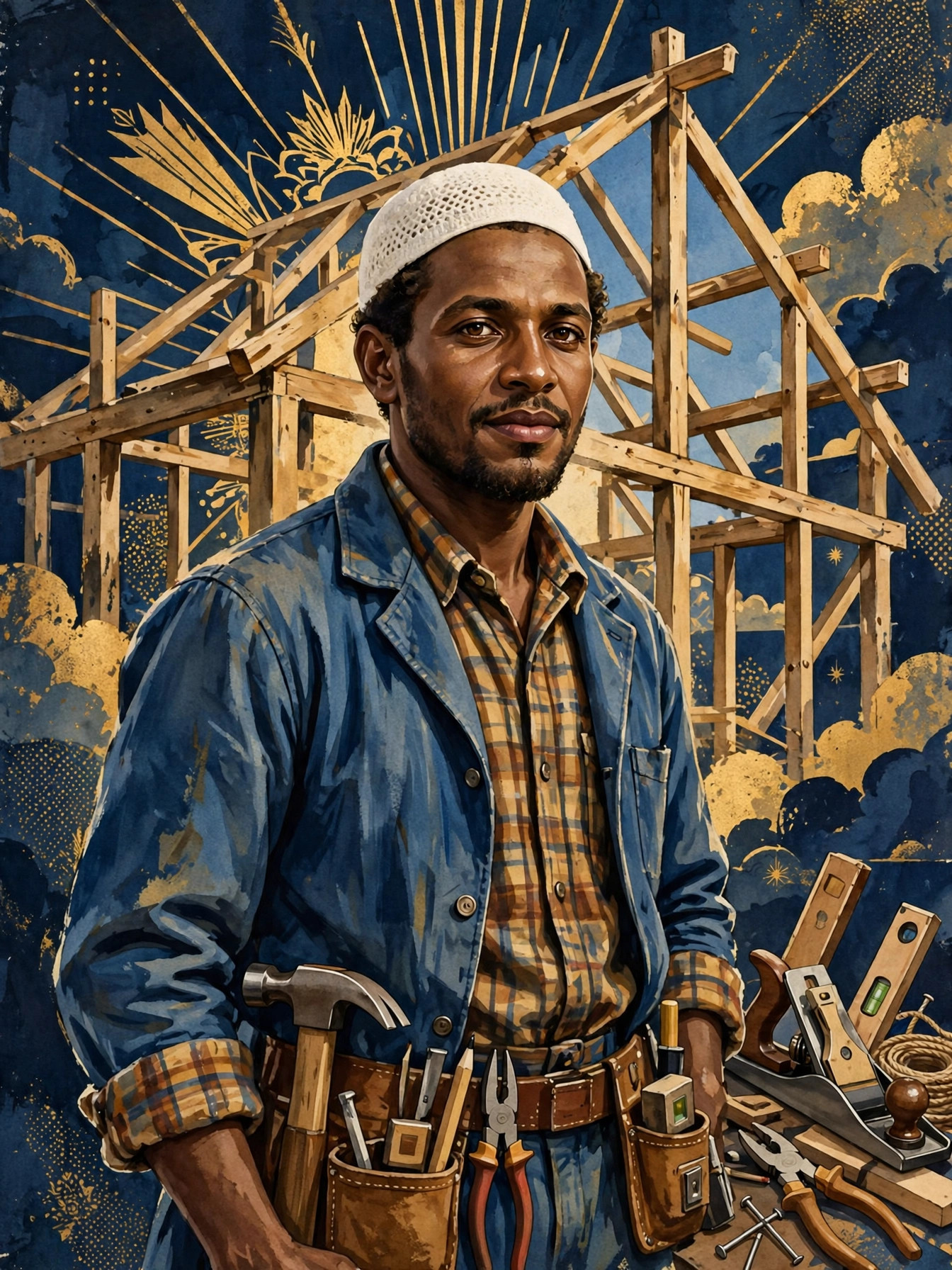
THE RAISING
THE BUILDER OF THE HOUSE
He raises the walls his children will pray in.
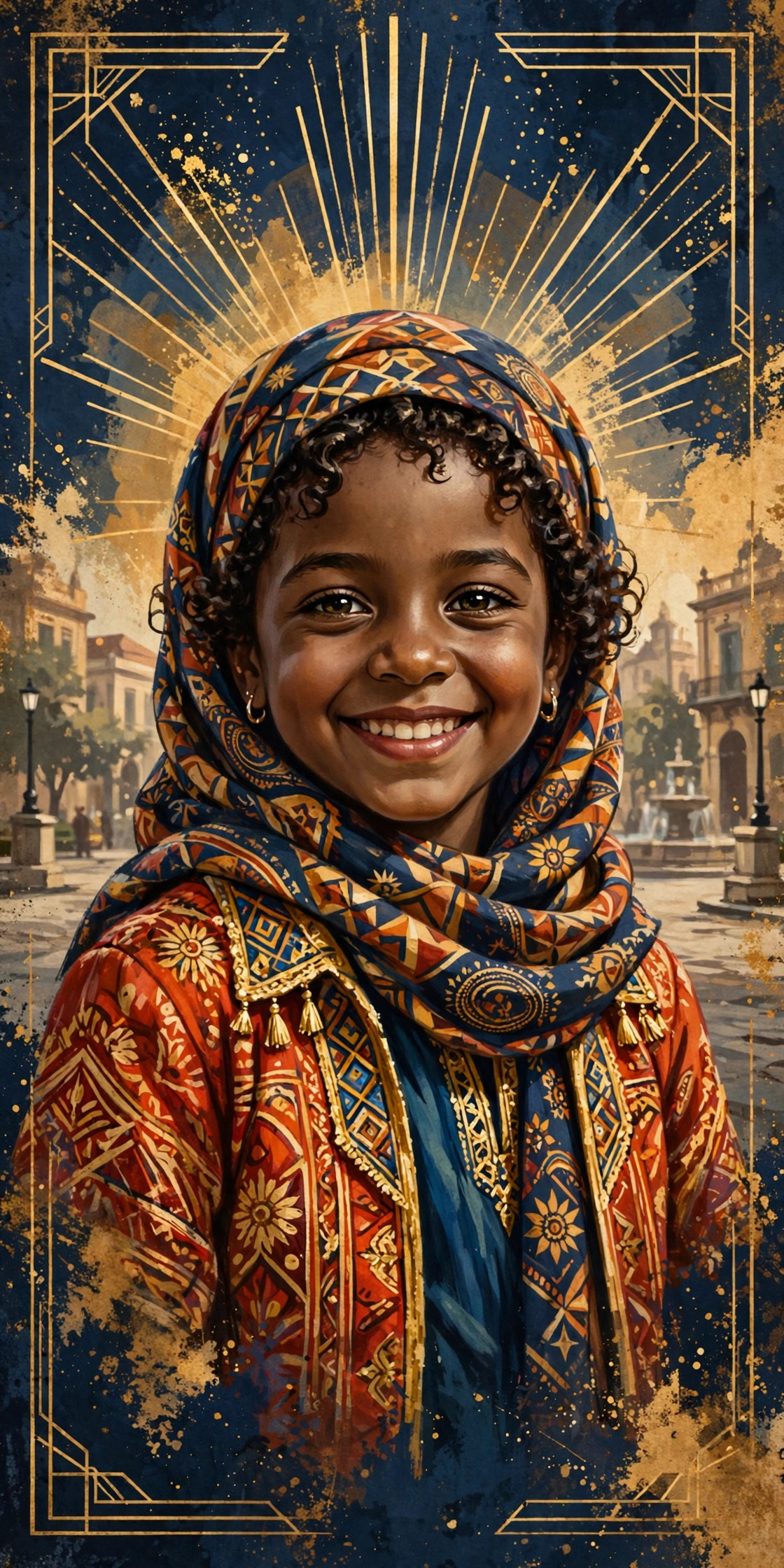
THE INHERITANCE
THE CHILD OF THE NEW LAND
Born to two homelands — the river, and the new shore.
STRUCTURE OF THE HOUSE
The order of the house is plain. At the top stands the Al Mahdi Dynasty. Beneath it, the Al Mahdi Dynasty Trust holds the ventures, among them this Kingdom. The Kingdom of PeaceKeepers is the parent company of the ventures, and Visit Nubian Square is the Hub through which the family is reached.
- Kingdom of PeaceKeepers — the parent company
- Visit Nubian Square — the Hub
- COIN — Commonwealth of Indigenous Nations — the Healthcare Network
- The International Nubian Museum — the heritage house
- Khartoum Polo Club — the sporting house
THE KINGDOM CALENDAR
NOVEMBER — HERITAGE MONTH
The Kingdom’s heritage season: Native American Heritage Month. In November 2026 the Treasurer of Massachusetts dated her citation for the formation of the COIN Healthcare Network to November 30, 2026, in honour of the month.
NOVEMBER 15 — THE DAY OF THE NAME
Kept from 2026: the day the Kingdom’s name came home (kingdomofnubia.com recovered) and its YouTube channel was claimed.
OCTOBER 1 — THE LISTING DAY
Kept from 2026: the day the Al Mahdi Dynasty Trust’s profile was accepted into the UN DESA Civil Society database.
THE REST OF THE YEAR
The court’s full calendar — feasts, fasts, and the seasons of the ministries — is in formation, and will be published here as the court settles it. Nothing is observed on this page that the house does not keep.